
Between Testaments
You must be out of your Brilliant Mind

Yet the LORD longs to be gracious to you; therefore he will rise up to show you compassion. For the LORD is a God of justice. Blessed are all who wait for him!
Isaiah 30:18
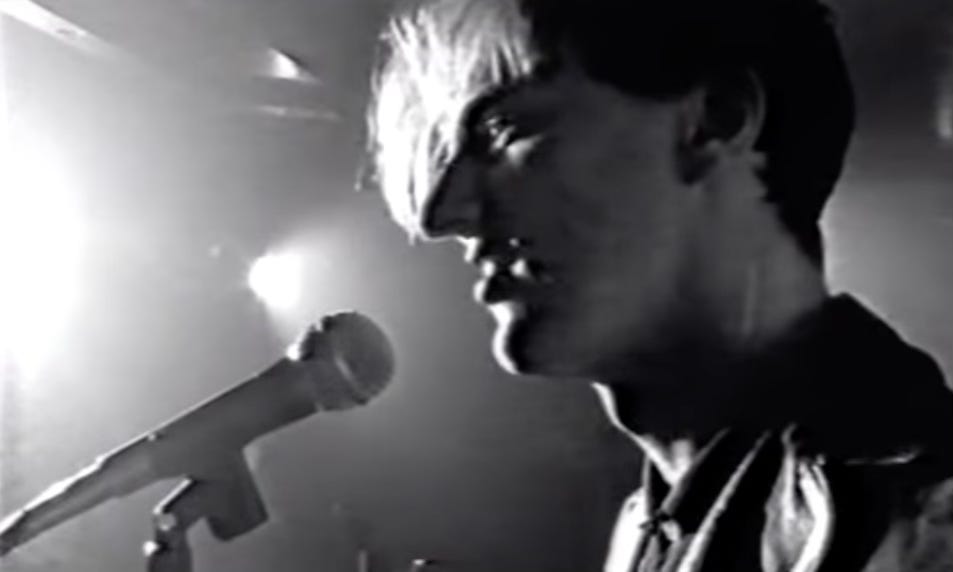
I remember hearing “Brilliant Mind” for the first time while watching John Hughes’ movie ‘Some Kind of Wonderful’. It was ethereal and melancholy. The lyrics stayed with me. To this day. It’s a song I’ve listened to more than any other. I know the lyrics backwards and forwards. I whisper them on tough days, I find myself singing it some mornings, even before the morning commute.
The band itself, Furniture, had been around for seven years before anything happened. They started in a living room in West London in 1979. Jim Irvin wrote the chorus of “Brilliant Mind” on a city bus after the unemployment office rejected him. The band had sent the demo to every label in London. Everybody passed, or said they’d sign them if they’d add a heavier beat and rearrange the song. They wouldn’t.
It charted at 21 in the UK in 1986. Their only hit ever. “Ready for the real thing,” Irvin sings, “but nobody’s selling.” The song keeps telling people to open up their eyes. Open up their ears. Open up their arms and hearts. But everybody’s yelling. Nobody’s listening. By the end Irvin turns it on himself. “I must be out of my brilliant mind.” All that noise and nobody hears a thing. Not even himself.
He didn’t know that on the bus. He was just broke, riding home, and something arrived between stops.
I dropped out of Hardin-Simmons in 1991 with one course left. A math credit. I’d also run up a deficit in chapel credits. They offered me a path back. Read certain theological books, write the responses, and the credits would count. Open up your eyes and ears. That’s all they were asking. I refused. Everything I thought meant something about that stand didn’t. It wasn’t principle. It was pride in a pressed shirt.
I drove up to Wichita Falls for youth ministry at a Presbyterian church. I managed a coffeehouse that doubled as a safe harbor for teenagers. That summer of ‘92, I went back and finished the math course. But I still wouldn’t touch the reading they’d offered for the chapel credits. I was righteous about it. I was wrong about it.
Then came the year of nothing.
I applied as assistant manager at Taco Bell. I flew to California for a week and applied at an Orange Julius. I almost joined the Navy. I filled out forms and drove to interviews and none of it connected. Ready for the real thing. Nobody selling. God had left the room. Not angry. Not punishing. Just gone.
Four hundred years passed between the last verse of Malachi and the first cry in a Bethlehem stable. The intertestamental period. No prophets. No visions. No fire on the mountain. Just ordinary people waking up in a world where God had stopped talking.
But God wasn’t silent. He was building roads. Rome paved highways across the known world. Greek became the common tongue. Synagogues spread into every city. Christ arrived to an empire that had been getting ready for him for four centuries without knowing why.
The silence was infrastructure.
I finally got work at a small magazine. A green sheet for truckers, advertising beat-up heavy equipment in Spanish. My first real job was answering phones and translating words like “knuckleboom loader” and “sheepsfoot roller.” I didn’t know what a moldboard was in English, let alone Spanish.
Meister Eckhart was a Dominican friar in the fourteenth century. He preached a whole sermon on where God’s Word actually arrives. Not in noise. Not in the yelling or the gesturing. In the room after everyone stops talking. “In the midst of the silence, the secret word was spoken to me.” In the quiet after.
Let me in, the song says.
Wichita Falls was the silence. The Orange Julius application was the silence. The desk where I looked up “scarifier” in two languages was the silence.
If you’re in a silent year right now, I won’t tell you to trust the plan. I’ll tell you something smaller. Silence doesn’t mean God left. It might mean what’s coming needs more room than what came before.
Christ didn’t show up during a dramatic age. He showed up after four hundred quiet years. In a barn. To a teenager.
The door was a barn in Bethlehem. It was enough.
P.S. - I’m a graduate of Hardin-Simmons University. It took me a while to get over my self-righteousness. But I did.
===
I’m at the stage
Where everything I thought meant something
Seems so unappealing
I’m ready for the real thing
But nobody’s selling, no
Except you and yours
Saying open up your eyes and ears
And let me in
You must be out of your brilliant mind
You must be out of your brilliant mind
You’re at the stage
You want your empty words heard
And everybody’s ready
They want to know your secret
But you are not telling
You’re just gesturing saying open up your arms and hearts
And let me in
You must be out of your brilliant mind
You must be out of your brilliant mind
I’m at the stage
Where I want my words heard and no-one wants to listen
And no-one wants to listen because everybody’s yelling
About you and yours
And how I’d have the answer if I’d only open up, up, up
And let you in
They must be out of their brilliant minds
They must be out of their brilliant minds
I said shame
Shame on you
Shame
Shame on you
Shame
Shame on you
You must be out of your brilliant mind
You must be out of your brilliant mind
And they must be out of their brilliant minds
Everyone out of their brilliant minds
I must be out, I must be out of my brilliant mind
My brilliant mind.
There’s a lot I don’t know about you Micah! I hope you’ll share and fill in the gaps!
I can't think about Wichita without recalling the fright train I rode through on the way to Montana trying to make it for Christmas in Missoula. Sitting on cold steel over the tracks all night was a bit chilly but, on that stop, an old inspector (maybe a WW2 vet) pointed me to a heated caboose. That act of (illegal) kindness felt like five-star accommodations for which I'm still grateful.
Wichita also recalls: As Falls Wichita, So Falls Wichita Falls is an album by Pat Metheny and jazz pianist Lyle Mays recorded in September 1980.
How art thou fallen from heaven, O Lucifer, son of the morning! how do you cut down to the ground, do all to weaken the nations!
Isaiah 14:12