
What Burned
and what was surrendered for burning

Were not our hearts burning within us while he talked with us on the road?
Luke 24:32
In Chariots of Fire, Eric Liddell tells his sister he’s going to China. But not yet. First he’s going to run. “I believe that God made me for a purpose,” he says. “For China. But he also made me fast. And when I run, I feel His pleasure.”
Liddell won gold at the 1924 Olympics. Then he went to China, just like he said he would. Twenty years later the Japanese put him in the Weihsien internment camp with eighteen hundred other people. He taught math. He organized athletics for the kids. He gave away what he had. He died of a brain tumor on February 21, 1945, five months before liberation. His last words were “It’s complete surrender.”
No irony in that. No deconstruction. A man who believed fully and spent everything he had on the belief.
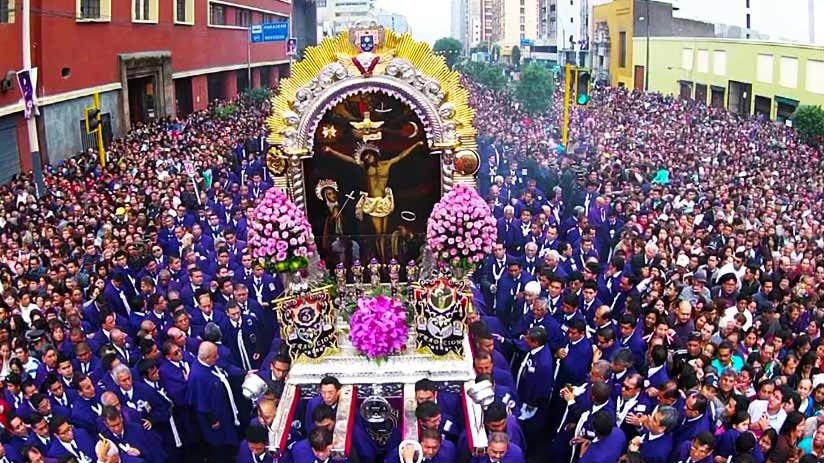
I grew up around men like that. Missionaries who moved their families to countries where people disappeared because they had a mission, and were willing to surrender everything for it. I was a teenager in Lima during Sendero Luminoso. Easter there was Semana Santa. Bodies. Men in purple robes carrying the andas through the streets, the Cristo swaying above the crowd, flower petals ground into the pavement under a thousand feet. Incense so thick you tasted it before you saw the procession turn the corner. The whole city participated. Catholic and otherwise. Nobody checked your theology at the door.
I didn’t understand then what I was watching. I just knew the body of Christ moved through the streets of Barranco on the backs of ordinary men, and you could smell it coming from two blocks away.
I’m fifty-eight now. An adult son of missionaries who’s lived more years in the USA than he ever lived in Peru, and Peru still feels more like home. That’s the thing about growing up between worlds. You never fully arrive in either one. You carry both. The hymns in the makeshift room and the procession in the street. The plywood and brick pews and the incense. You learn early that faith shows up in more than one language, and none of them translate perfectly.
Easter at fifty-eight isn’t what it was at eight. At eight it was the Easter service and the empty tomb and the certainty that came with being told what to believe before you were old enough to choose. At fifty-eight it’s something I’ve chosen. Not inherited. Not assigned. Chosen, with everything I’ve seen and everywhere I’ve been stacked behind the choice.
Dietrich Bonhoeffer, writing from Tegel prison on April 30, 1944, asked a question that matters more to me every year. “What is bothering me incessantly is the question what Christianity really is, or indeed who Christ really is, for us today.” He wrote it nine months before the Nazis hanged him at Flossenburg. Bonhoeffer wasn’t tearing the faith apart. He was getting closer to the center of it. Stripping away what didn’t belong so he could see what did.
That’s the work of fifty-eight years. Not dismantling. Clarifying. Figuring out what’s Christ and what’s just the Christ industry. The belief is real. I’ve watched men live it and die for it. Liddell in a camp. Bonhoeffer in a cell. Missionaries in Lima who stayed when staying cost something. The institution around them had its own agenda. But the men weren’t the institution.
The Emmaus road is my favorite resurrection story because the burning came first. Before recognition. Before theology. Before anyone said the word “risen.” Two people walked beside Jesus and didn’t know him. Their hearts burned anyway. The knowing came later, over bread broken at a table they didn’t set. And the moment they recognized him, he vanished.
That’s how it works at fifty-eight. You don’t get the burning and the knowing at the same time. You walk. You carry both worlds. Something burns and you can’t name it yet. Then one day, over bread, over an ordinary Tuesday, it shows up and you recognize it and it’s already gone and you’re left with the Christ who was there the whole time.
If you’ve lived between worlds, you know. The faith doesn’t land clean. It comes in two languages and neither one is complete. But something burns underneath the translation. The same thing that burned on a road to Emmaus. The same thing Liddell felt when he ran.
Christ showed up as a stranger on a road. As bread at a table nobody set. As a man who felt God’s pleasure when he ran.
Complete surrender. It burns still.